By anonymous author
When consumers can no longer trust food
If you ask different people for a definition of quality, you will get just as many different answers. The student will say quality is a cheap and tasty product. For him, the origin or the manufacturing conditions will be less important than for an urban consumer group, which are very environmental and social conscious. We also see the same conflicts of interest in a producer-retailer relationship. The producer will use a different quality concept than a retailer. In order to solve this conflict, the DLG offers itself as a connector in this difficult relationship. Furthermore, the consumer has as well different demands on producers and retailers. Nowadays, these demands are partly regulated by the legislator. Thus, the law ensures that the sold food is safe. Furthermore, there are regulations for animal welfare, the use of pesticides and it is required that the products are declared correctly. However, the legislator has only limited possibilities to enforce these laws and regulations. In general, he only controls the responsibility of the producers (comparison: the police make speed controls with only three radar sets throughout Switzerland). The consumer-producer relationship is also burdened by various food scandals. Consumers seem to trust the food industry only partially and this should make all producers and retail companies thinking about.
Equilibrium of terror
However, the food trade in Switzerland and in Germany is dominated by a few large companies in a monopoly situation. The “big ones” set the pace, i.e. these companies dictate the framework conditions for the producers. In particular, prices are being massively depressed in this highly competitive environment. Thus the “big ones” partly accept the tricks of the producers in cheap terms (we deliberately ignore the influence of the consumer regarding price pressure). This food fraud can only be limited by the “police” (legislator) with the existing resources and cannot be prevented. Even the DLG can only partially uncover these frauds with the classical methods of quality assurance. This constellation in the food trade can be described as a certain balance of terror.
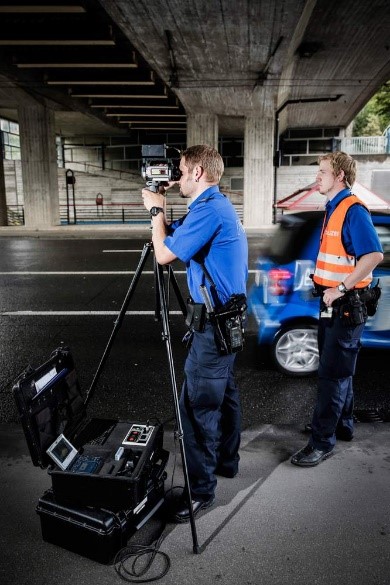
Figure 1. The legislator in the actual situation (http://dok.sonntagszeitung.ch/2014/radarfallen/)
The Blockchain Thing
This problem of trust can be restored with digital solutions. The Block Chain (BC) technology can be named as the keyword here.
-Block Chain Technology?
-This Krypto currency thing?
-Yes, exactly!
But how can this technology help to solve the confidence problem in the food industry? The easiest way to explain this is the example of a used car. It is said that about one third of all mileages of used cars have been manipulated. Why this is done is obvious. But exactly this behaviour is a fraud at the customer! But how can this problem be solved by BC technology? Quite simply, the current mileage is automatically stored in a BC and can then be retrieved by the interested party in the event of resale. The advantage over classic data storage on a central database is that a BC cannot be simply manipulated. The seller cannot therefore adjust the mileage downwards shortly before resale in order to increase the selling price.

Figure 2. The Block Chain Super man!! (https://www.uihere.com/free-cliparts/clark-kent-batman-superhero-illustration-superman-1037923)
But what does this mean for food?
I think every one of us has once wondered whether exactly what is on the label is really contained in a package. We in Switzerland are incredibly proud of our progressive animal protection but think back to the metaphor with the police and their 3 radar sets throughout Switzerland. So, who can guarantee me that the indication of origin on the meat packaging really corresponds to reality? Basically, nobody – but here the BC solution comes into play. What if the exact indication of origin (e.g. GPS data) of a product, e.g. a chicken, could be stored directly in the BC? Then the seller could understand exactly where this chicken comes from. Here, however, the consumer would also have to have access to the data in order to maintain full transparency. If only the retailer can access the data, the problem of trust cannot be solved!
If you put shit in, you will get shit out!
This striking statement aptly describes the problem of a BC. If a producer wants to actively deceive his customers/consumers, this is also possible in a BC. In principle, the producer can store any information in the BC. If we stick to the chicken example, the producer can manipulate the GPS data and the consumer is still betrayed. The solution for this can again come from an organization like the DLG. In such a BC, the DLG would have to form the control instance and check the entries in the BC in order to be able to guarantee the authenticity of the information.
And so, we must ask ourselves critically, to what extent we are not again at the problem with the police with the three radar sets.

Figure 3. The Issue with the reality (https://de.ign.com/batman-v-superman-dawn-of-justice/112558/feature/batman-v-superman-5-wege-wie-batman-den-mann-aus-stahl-besie)
 FoodArchitecture