
By Agent D.T.
Rethinking sustainability. Online shopping another step toward a digitalized future and a step backward to less healthy wellbeing.
The shift toward more and more digitalized food businesses has become a fact. More and more people are shifting their shopping behavior toward online-shopping experiences, especially the young generations (who are the future).
Online-shopping is simple, flexible and quick. But what are we losing, what are we sacrificing for this experience? the answer is simple our health.
The future language of shopping business is called online/ digital. The shopping experience is shifting from an active experience to an inactive experience. While sitting on your/our sofa or even enjoying a warm bath, you/we can order with few finger movements and few clicks almost anything you/we want, food, clothes, electronics and many other things, you can even choose the delivery time and the delivery mean.
Dealing with the subject only from the customer point of view, online shopping is very convenient, and it has a lot of advantages. The buying experience is very personal. Online shopping provides customers the possibility to only concentrate on the things that fits and suits them. Using the filter option, customers can (only) look for the type of product they wish. They/we can sort food (allergies, diets, preferences, origins..etc), they can look only for clothes that fit their sizes and styles. More and more websites are even offering an instant online-chatting or facetiming option, besides the conventional product-comparison-bottom, to be able to advise or consult the customer instantly. Not to forget, the applied feedback and rating system for each product, which allows transparency and provides the customers with the option of finding out more about the desired product from another customer. In general, online shopping is time efficient. But is this efficiency and time saving really sustainable holistically, economically and ecologically?
What about the shopping activity? the average minutes per week spent on household and grocery shopping worldwide is 43 minutes, not including the time spent getting to and from the shop and back home, carrying the bags and related activities. This further excludes the time spent on shopping for other things and needs like electronics and clothes. In Germany the average time spent on grocery shopping is 36 minutes/day (women) and 26 minutes/day (men).

Figure 1. Average minutes per day spent on household shopping in OECD countries plus China, India and South Africa by gender, as of 2016. Retrieved from http://www.statista.com.
In average, these are about 30 minutes of physical activity per day, walking, moving, going up and down, and carrying bags and goods. Those 30 minutes of physical activity would be lost for the benefit of online shopping. The world health organization states in her document, Physical activity and health in Europe: evidence for action (retrieved on http://www.euro.who.int/en/health-topics/disease-prevention/physical-activity/publications/2006/physical-activity-and-health-in-europe-evidence-for-action), that ‘’more than half the population of the WHO European Region is not active enough to meet health recommendations, and the trend is towards less activity, not more.’’
As defined by the WHO itself, Physical activity is any bodily movement produced by skeletal muscles that requires energy expenditure and is a fundamental means of improving people’s physical and mental health. It reduces the risks of many noncommunicable diseases and benefits society by increasing social interaction and community engagement. Physical activity is not just a public health issue; it also promotes the well-being of communities and the protection of the environment, and comprises an investment in future generations. This definition is also supported and further elaborated in the 17 goals for a sustainable development.
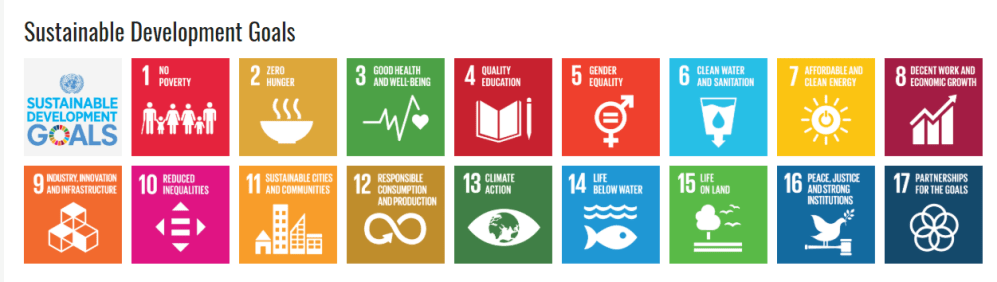
Figure 2. 17 Goals for sustainable development. Retrieved on https://sustainabledevelopment.un.org/sdgs.
So, is online shopping sustainable? What about the social side of offline-shopping, the direct contact and communication with other people, with the workers, with the whole environment.
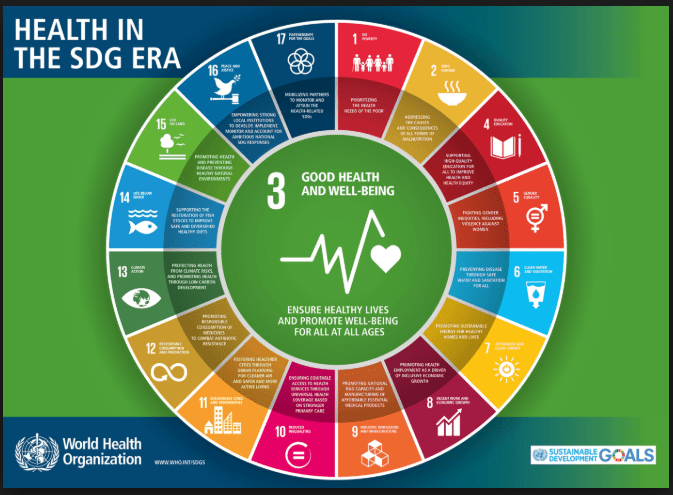
Figure 3. Good health and well- being in the main focus of sustainable development goals. Retrieved on https://www.who.int/sdg/en/.
Do you really pay less online, how can you make that sure? An actual example shows the contrary (see pictures below).

Figure 4. Up to 5 CHF is the price difference between online and at-store shopping.
Another question is the Sustainability of the returned goods. The return rates of online bought goods is close-up to 30% and more (https://www.shopify.com/enterprise/ecommerce-returns).
What about the minimum request value, what about the saved data, what about privacy, what about hundreds of other questions?
Sustainability first digital second, it is about time to think and find solutions together, it is about time to form our brave new world in a form that enables us to direct digitalization to serve our health and well-being and guarantee it.
The future belongs to a digitalized food business that focuses on the customer and his healthy well-being.
 FoodArchitecture