
Time to Harmonize Algorithms with Human Intuition
From the lecture by Peter Kauf, who is a mathematician and CEO of Prognosix, we learned how algorithms can be used in the predictive analysis and how humans can draw better outcomes from judgment by algorithms.
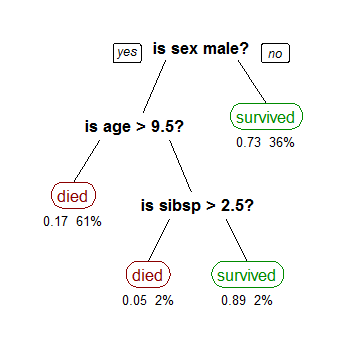
Image source: By Stephen Milborrow – Own work, CC BY-SA 3.0, https://commons.wikimedia.org/w/index.php?curid=14143467
At first, let’s have a quick look at the algorithm process. An algorithm is a step by step method of solving a problem. The algorithm gives an output result with regard to the condition if we put input data. Let’s imagine. We want to know how many bottles of orange juice will be sold this year. Then we put the last 10 years of sale data with the data about weekday, holidays, promotion, temperature and so on for the same period. With this bunch of data subset, the algorithm sets to work. The algorithm separates the data from diverse features such as temperature or holidays, compares every combination of features, and ranks them according to the importance of effect on actual sales amount. Finally, the algorithm gets the structure of the regression tree, which can use for the prediction of this year according to the above interpretation process. The regression tree which you find in the picture is one of the basic forms of regression tree. Basically, this is how the neural network is working. After constructing the regression tree by algorithm, it can show us what it expects in the future. Surely, this predictive analysis can be used for forecasting demand in food or yield of cultivation as well.
Secondly, AI doesn’t accept human’s manual override as default anymore. Algorithms take in account only in the case that manual override is “worth it”. Of course, this situation owes the overwhelming speed of data processing capability. For getting useful and trustful information, we need a huge amount of data input to let the algorithms learn. Thanks to the amazing short processing times, we can input enough data that we can achieve a high level of trust the results out of this system, and expect a less-biased outcome than by following the human gut.
DANCE of machine: better prediction & judgement by algorithms
In reference to the book “Machine, Platform, Crowd” by Andrew Mcafee and Erik Brynjolfsson, with the acronym “DANCE”, we can name 5 areas why the machine learning is developing with the exponential speed recently. It indicates data, algorithms, networks, the cloud, and exponential improvements in digital hardware. According to Moore’s law, the number of transistors on a microchip doubles about every two years and this leads to a powerful computer system. Likewise, the amazing speed of the development in these 5 areas leads to the exponential improvement of machine learning. Consequently, the machine is able to predict the future based on lots of data with a short computation time.
Image source : https://unsplash.com/photos/1K6IQsQbizI
Polany’s paradox: we can know more than we can tell
Nevertheless, there are still questions about AI systems based on algorithms. First of all, the data input itself is made by humans. It is therefore human-bias. In the third-day lecture by Marcel Blattner, he pointed out this problem showing what happens if we google the beautiful skin or unprofessional haircut. The algorithms learned from humans, and as a result of that, google shows us white European women’s skin as beautiful skin, and black African women’s hairstyle as an unprofessional haircut on the other hand. How politically incorrect! Peter also mentioned that data is often messy and requires a lot of preprocessing through human experts previously, which means data needs somehow human’s interpretation and can be biased before the judgment by algorithms itself.
Furthermore, the neural network doesn’t work in the same way our neurons work. As Michael Polany, the British-Hungarian philosopher, articulated, humans know how the world functions beyond the explicit understanding. Therefore, we cannot design algorithms or order the machine as we do. By trial & error, or interaction from each other, we experience the society and the system. We learn countless things by mistake or by accident. The algorithms cannot experience or sense our society, but get input only by humans in the form of data. Regardless of the astonishing speed of data processing, it has its limitations.
Walk side by side with AI
Even though algorithms have limitations, we cannot neglect algorithms anymore and should not regard them just as computing machines. Already, there are many pieces of evidence that relying on data and algorithms leads to better decisions and forecasts than relying on human experts. Especially, the logical process such as prediction, classification or diagnosis can be improved by automating with the help of algorithms. We should keep in mind that we are on the way to the development of AI, not the final step, but just the beginning step.
In the food & beverage industry, we are surrounded by so many problems we should confront and get solved, such as food waste, unequal distribution procurement, and unclear supply chains. If we can take advantage of algorithms and AI in a constructive way, they help us open our eyes and get fresh inspiration & perspective to solve our problems.
Image Source Title: https://stock.adobe.com/
Author: Dasom Bae
 FoodArchitecture