Leveraging the potential of smart food safety
Recent technological advances in Digitalization or the Internet of Things (IoT) are called to radically revolutionize the food industry. In this vein, there has been a growing interest in smart devices, digital twins, and artificial intelligence to be utilized in the automation process in food production.Up to this day, the food industry has moved from traditional large-scale factories to connected-smart production manufacturers that are intelligent and continuously collecting data in each production step. Based on these data and combined with automated processing and machine learning, the digitalization in the food industry contributed to the elimination of harmful bacteria in foods in milliseconds. Moreover, the successful case of preservation of food quality including nutrients has been shown in a cost-efficient, and sustainable way.
“The pandemic of COVID-19 provides an opportunity to enhance the awareness of food safety.”

Unexpectedly, the COVID-19 pandemic had tremendous effects on the food industry. One example is the growing consumer awareness of food safety. As a result, there is a growing trend of consumers that not only rethink food consumption safety, but also questioning the sustainability of the production and its impact on nature. Thus, digitalization can be leveraged to support food safety in order to contribute to smarter food products.
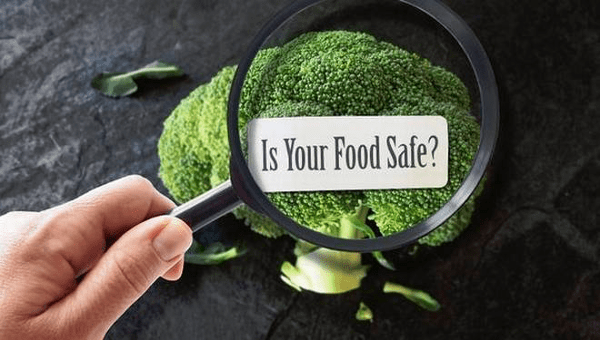
“Easier and quicker access to solve risks”
Some practical utilization of artificial intelligence has already been successfully integrated into the food supply chain to manage food safety risks. To provide an example, the safefood.ai by Bühler AG provides insights on food safety threats, issues, and solutions in real-time, based on gathered information from thousands of new sites, official sources, and social media. Moreover, the advanced application of AI is less likely to human error and bias arises from humans, which can contribute auditor to food safety audits.
“What are we looking for? – Food is clean, safe, and trustworthy.”
In conclusion, digital technologies such as artificial intelligence and blockchains are just a few rising examples to potentially support food safety. In order to strengthen food safety and enhance the consumer’s trust for the future, the food industry not only encompasses these digital technologies with the addition of innovative digital solutions, scientific studies, and data, but also provide consumers with the reliable traceability of food products. Moreover, advanced applications (e.g., food safety decision-making) should continuously be developed to provide an effective and obvious solution to future food safety challenges.
Author: Jinah Lee
Image Source Title: https://www.foodsafetynews.com/2017/12/lab-robots-crucial-for-end-to-end-food-safety-data-systems/
 FoodArchitecture