
Does the depiction of the carbon dioxide emission influence our consumer behaviour?
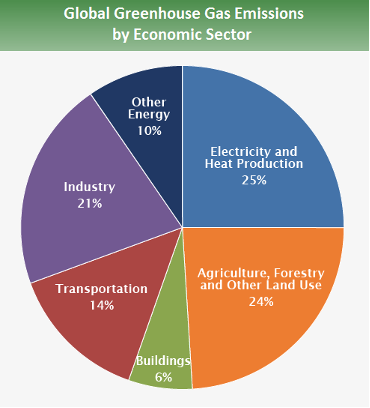
Before we can ask ourselves the question if carbon dioxide (CO2) influences our consumer behaviour, we first have to dive deeper into the potential effect of CO2 to our planet. When talking about our planet, the climate change or sustainability CO2 emissions are discussed most. Usually, two things come to my mind when I think about CO2 emissions: rainforest deforestation and meat consumption. But of course, there are many more causes for the release of CO2 into the environment. Agriculture, forestry and land use as well as electricity and heat production release most of the global greenhouse gas emissions.
But how are these numbers actually calculated?
Companies start to analyse the CO2 emissions not only by their products but also of the whole company. The investigation starts with analysing the direct emissions, which are obvious and have an immediate impact on the world. The result of this analysis is also the one which is publicly presented when one compares different products and their effect on the planet. But is this really the whole impact the product has? NO. Mostly the indirect emissions like energy or heat and also downstream and upstream activities are not taken into account. Even though the downstream and upstream activities can take up to 90% of the total emissions. The problem about the calculation process is, that it takes the company up to 6 years until they fully completed the analysis. But isn’t this way to long? YES. Because if they want to react after these six years, most of it has changed already.
How are we able to recognize if the company starts to analyse their CO2 emissions?To let the consumer know that the company is aware of their CO2 emissions and tackles them, it starts with placing labels on top of the package of their product. These labels either tell the amount of CO2 used for this specific product or tell the consumer with a “climate score” if the amount used is seen as good or bad. Another possibility could be to let the consumer decide directly which components they want to buy depending on their CO2 emissions. This system is for example used when mixing your own muesli on the Products which are better are represented as “CO2 saver / CO2 super saver”.
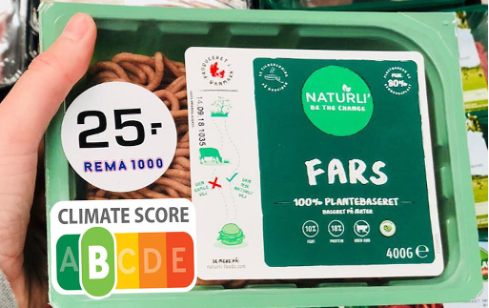
To summarize, the first steps of a company into the right direction is done when they start thinking about their CO2 impact and face their problems. In order to tackle the key problems in a short amount of time, it is necessary to get expertise from the outside. As mentioned before, showing transparency in their ongoing process is a good sign to inform the consumer with climate scores or other labels on front of a package. The effect on the consumer behaviour will probably be positive and could lead to an increase in sales and/or a better awareness about CO2 emissions. It implies, that the company is in a process of challenging themselves with sustainability questions. If these labels influence the consumer behaviour is finally decided by the consumer himself. A good advice for consumers might be to go further into detail if the company tackles and reaches their stated CO2 emission goals.
Whether we are influenced by the depiction of the CO2 emissions on the products we consume can just be answered by ourselves, but it will certainly make us think more about it if we are consuming too many products with high CO2 emissions in the future.
Author: Anne Schwenk
Image Source Title: https://www.greenqueen.com.hk/study-shows-carbon-emission-labels-on-our-food-impact-consumer-choices/
 FoodArchitecture