
E-commerce – the land where milk and honey flows?
In January 2020, no one would have imagined how this year would challenge us as globalized and interconnected world. How different this year would be and how fast we as human beings would have to adapt to new situations. Curfews, social distancing, home office, empty shelves in supermarkets and a high level of uncertainty. The Covid-19 crisis challenged us in many ways. And it becomes clear, that the pandemic will leave its marks in many areas of life.
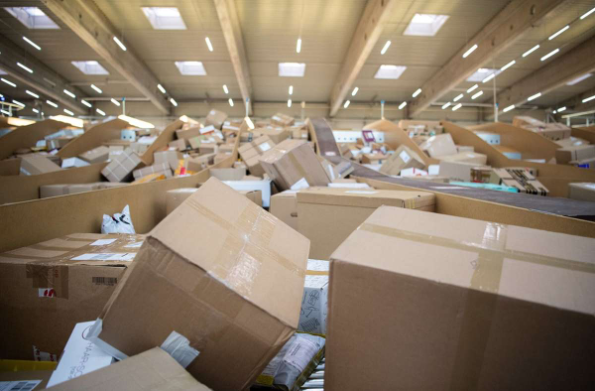
One area that will emerge as a winner from the crisis is clearly that of e-commerce. When staying at home became a credo, e-commerce boosted as never seen before. It made a ten years growth in only three months! Seats were removed from passenger planes converting them into cargo planes. Parcel services reached their limits due to exploding online orders.
Companies which have already relied on online trade as well as their shareholders are delighted. Farmy, a swiss online shop for fresh food could even triple its turnover from 9 to 26 million swiss franks in 2020. Consumers’ obstacles and doubts about online (food) shopping seem to have softened at the latest due to this exceptional year.
The path from offline to online
An effective and well working supply chain as well as data expertise are key success factors. And, speed! Speed is everything in the digital age! Especially when it comes to e-commerce of fresh food, no parameter is as important as a fast shipment, ensuring freshness and high quality of the product. Questions such as which product range can be offered online, as well as which competences can be assigned internally and which should be outsourced, need to be answered before the implementation of an online shop.
Which tools will make online retail even more attractive in the future?
Augmented reality is certainly one technology that will make our online shopping experience even more real and tangible in the future. A key factor in the customers’ buying decision is a vivid presentation of goods. As consumers must refrain from touching and feeling the product when shopping online, augmented reality could compensate this disadvantage. Gucci recently showed the way. Via augmented reality, it is possible to virtually try on the desired shoes on one’s own foot. The boundaries between the digital world and reality are blurring. And this trend will continue.
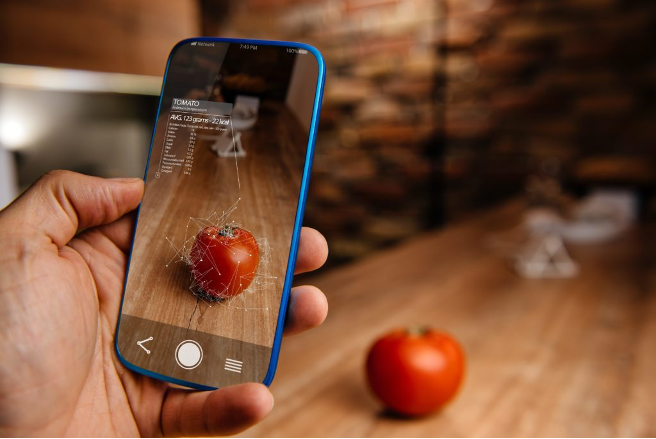
Another driver for e-commerce is artificial intelligence or machine learning. Based on previous purchases and the current data of other users, trends can be analysed and individually tailored content can be presented and prioritised. Customers see in the online shop at first glance exactly what suits to them based on the data. This technique also benefits chat bots as well as visual and voice search, which should lead us even more easily to our desired product.
No online-trading without online mobile apps
Shopping apps are among the top ten most popular apps. Nowadays 70 % of internet traffic takes place on mobile devices. However, most purchases are still made via the classic PC, although the ratio is gradually shifting. Super apps like WeChat emerge and offer in combination with artificial intelligence great opportunities for online markets. These marketplaces will increasingly become central platforms for consumers because they bind customers to them through additional offers and services.
Social commerce – the new e-commerce?
Social networks like Instagram, Facebook, Snapchat and Pinterest are no longer limited to being a source of inspiration for customers. They are developing towards integrated sales platforms. Where once social media networks represented promising channels for acquiring customers through influencer marketing, today integrated sales platforms have emerged, through which purchases can be made directly. This development towards social marketplaces is not surprising. Nine out of ten online shoppers today also use social networks. This makes them the ideal points of sale. Customers are now no longer just solicited, but can make their purchase directly. Switching to another platform is no longer necessary. Fixed shopping options allow seamless payment. Online shopping through the fast lane! This is not just about an uncomplicated purchasing process. Rather, social commerce strengthens the feeling of belonging to an experience group, being part of a community. Shared experience via digital platforms. A phenomenon that keeps people together, especially during the pandemic.

What will last after the Covid-19 crisis?
One thing is clear. Our shopping behaviour will have changed irreversibly. What was already apparent before the crisis, has only continued to evolve faster as a result of the pandemic and the new challenges it has brought. The winners have been those who have already jumped on the bandwagon of e-commerce and social commerce. There is no question that online markets with their diverse possibilities will continue to be the places where an enormous increase in turnover can be expected in the future. Exaggerated, one could say: They are the land where milk and honey flows!
Author: Lisa Schwab
Image Source Title: https://www.cio.com/article/2955485/how-to-build-an-ecommerce-business-that-sells-food-online.html (accessed 14.01.2020)
 FoodArchitecture