Could a CacaoCoin be the Bitcoin for farmers?
Did you know that cacao beans have already been a currency 600 years ago? The ancient Aztecs used cacao beans as one of their currencies. This was a widespread form of money at that time. For example, a rabbit was worth 30 cacao beans. (https://en.wikipedia.org/wiki/Aztecs) And a turkey egg costed 3 cacao beans.
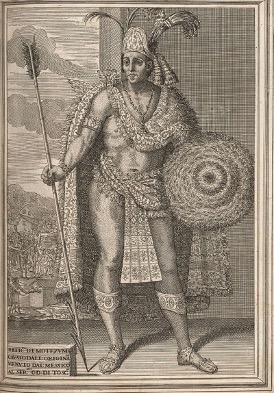
Cacao beans were also classified as:
“food of the gods”
The wealthiest person in the Aztec time was Motecuhzomas II. There are said to have been 960,000,000 beans in his cocoa store in Tenochtitlan. But at that time, they had a little problem. Their cacao beans, their currency, could get moldy, rotten, spoiled… Despite everything, cocoa is and remains a food. The Aztecs mixed the grounded cacao with water and got their traditional drink Xocoatl.
What if we bring back the cacao beans as a currency?
This could be in form of a cryptocurrency. I’ll present you my idea of CacaoCoin. CacaoCoin is a cryptocurrency. It is based on the blockchain technology.

What is blockchain?
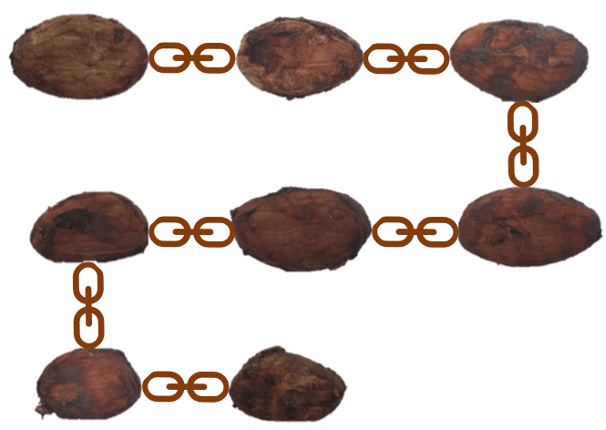
In a blockchain, information becomes recorder, which is then stored in data blocks. Those data blocks are linked to other data blocks via cryptography in a chronological order. So, when new data blocks come, they are chained to the last data block. But what exactly does a block contain? Each block contains some information, a hash and the hash of the previous block. But the information in those blocks depend on the type of blockchain. The hash of each block can be compared to a fingerprint, which is in each case unique. If any information in the block is changed, then the hash of this block will change as well. At the end, this block is not anymore the same block as before. With the hash of the previous block, we create a chain, which is unique, and this makes the blockchain secure. In the case a hash becomes manipulated the chain will become invalid.
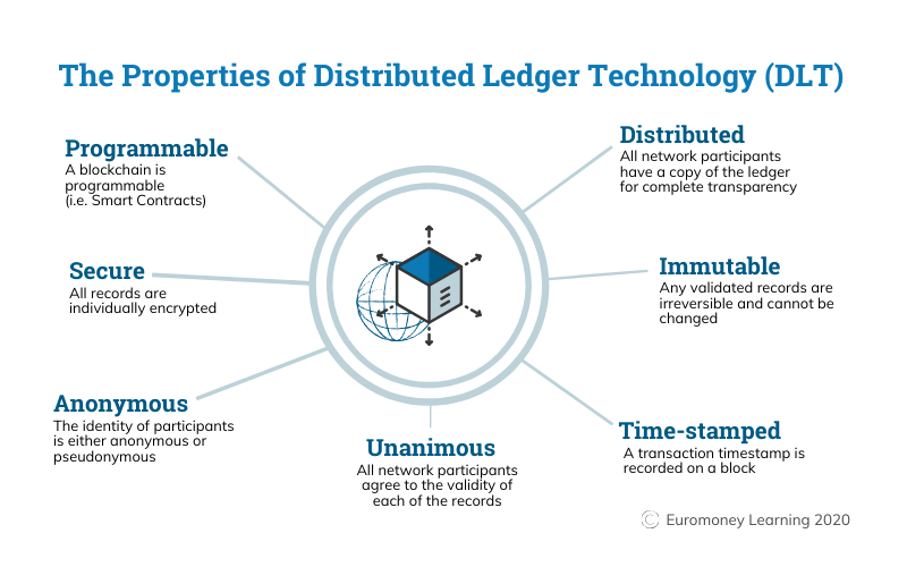
What if a hacker manipulates a block and generates a whole new blockchain? For this case, the blockchain has something called proof-of-work. This mechanism slows down the creation of new blocks. Another security measure is the Distributed Ledger Technology. In this technology, the blockchain is in a peer-to-peer (P2P) network. When a new peer joins network, the peer will gain a copy of the blockchain. If a new block enters the blockchain, each peer will get the new block and each node (node is like a connection point) verifies the block, to assure that the block hasn’t been manipulated. To conclude, the blockchain is a distributed ledger that is completely open to anyone. Once information has been recorded inside a blockchain, it becomes nearly impossible to hack or manipulate the system.
How could the CacaoCoin work and how could we make use it?
Let’s imagine, the farmer sells cacao to a customer, who can buy the cacao with CacaoCoins. In this case, the farmer gets the cash immediately without any deducting fees for the transaction costs of traditional transactions via banks. But what about the amount of circulating CacaoCoins? 1 kg of cacao is worth 1 CacaoCoin. So, for the circulating amount of CacaoCoins, we go with the statistical amount of cacao produced worldwide per year. In 2018/2019 this was 4.8 billion kg cacao. We begin with 4.8 billion CacaoCoins on the market. How does the price change, what influences the price? Is it a good harvesting year of cacao, then the price will drop due to an oversupply on the market. On the other hand, if the demand increases and the supply does not, the price will rise. Another reason for changing prices the customer can decide which quality of cacao he wants to buy. For example, organic cacao would be more expensive per kg than non-organic cacao. By buying the desired quality, the customer gets a certificate based on the blockchain technology, which certifies the quality, the origin and the cocoa farmer. Thus the customer has full transparency over the purchased cacao. The customer has acquired these certificates, which can be compared with a contract, with the purchase of the cacao beans from the farmer with CacaoCoins.
To have even more transparency of the purchased cacao, each processing step, like where are the cacao beans coming from, used fertilizers, transportation till the customer etc., can be added to the certificate of purchase. This data could be used for a Life Cycle Assessment (LCA) of the whole cacao value chain.
At the end, the concept of CacaoCoins could lead to more transparency, more information, more security and the farmer earns more money with his sold cocoa with less or no fees.
Author: Tom Bürgin
Image Source Title: https://www.amazon.com/Fort-Knox-Chocolate-Coins-1-5In/dp/B00Q1S10FE
Additional sources used:
https://www2.deloitte.com/ch/de/pages/strategy-operations/articles/blockchain-explained.html
https://www.investopedia.com/terms/b/blockchain.asp
https://chocolateclass.wordpress.com/2019/03/15/cacaocoin-cacao-beans-as-currency-in-mesoamerica/
https://de.wikipedia.org/wiki/Tenochtitlan
https://www.grin.com/document/109642
 FoodArchitecture