Will the future farm be your neighbour?
Humans started farming already about 12 000 years ago. Since then, farming has evolved massively and is now the most efficient it has ever been. And still, we fall short.
In 2020 around 760 million people were facing hunger and nearly one in three people did not have access to an adequate and healthy diet . Additionally, the world population is growing rapidly, and it is expected to reach more than 9 billion by 2050. This would mean that we would need to increase the global food production by about 70% until then. However, 50% of habitable land on earth is already being used for agriculture and yields are even expected to decrease due to climate change. This brings us to the question: how could we expand to meet the demand, while reducing the impact on climate?

The answer is: with the help of technology!
Controlled environment agriculture (CEA) is a technology-based approach to farming. It consists of growing food indoors to protect the crops from climatical elements and creating an optimal environment for each crop. Think of a greenhouse: this is the first basic step of a controlled environment agriculture. It permits to regulate the temperature, humidity and potentially light, and protect the crops from pests. But technology is taking this approach to a whole new level.
New technologies are permitting to grow crops in vertical indoor farms, which can use resources more efficiently, saving about 95% of water and 20 times less land, when compared to a usual agricultural field. Plants can be grown either by use of hydro- or aeroponics, which substitute the use of soil with water or a controlled gaseous environment. With these systems all the nutrients are delivered directly to the plant roots and specific nutrient recipes are computed in order to promote optimal health and growth of the selected plants. By applying artificial intelligence, programs can be made which adapt specifically to a selected crops needs and create perfect conditions for its growth. These systems can also learn from the plants through sensors that monitor their growth and further adjust themselves to create perfect conditions for the plants needs.
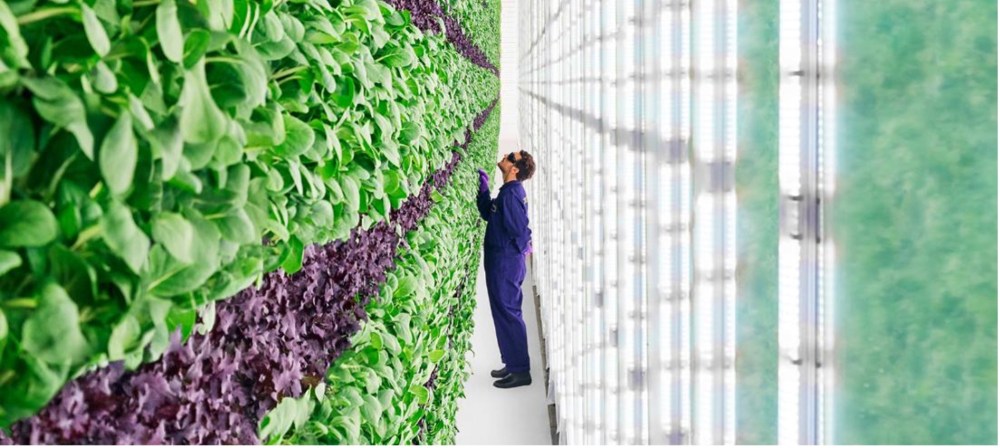
According to the UN, about 40% of global crops are lost to pests and plant diseases.1 This is equal to almost 300-billion-dollar loss each year and leads to a big loss of biodiversity due to intensive pesticide use. Growing indoors minimizes the danger of pests and therefore does not require the use of pesticides, producing clean label produce without harming the environment and interfering with biodiversity.
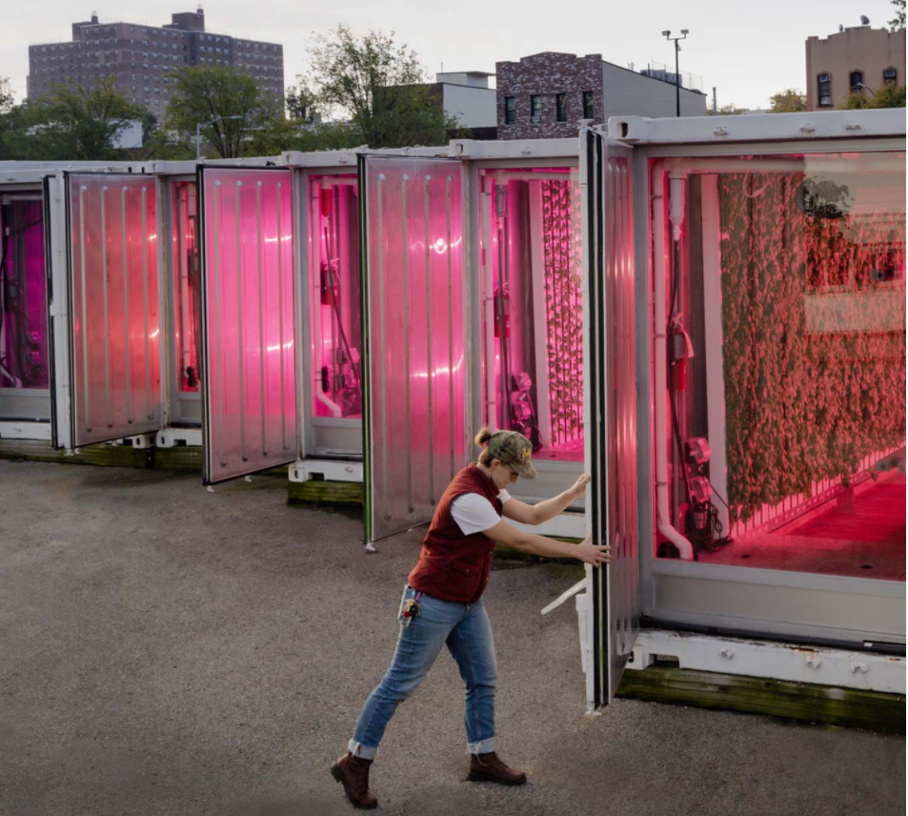
Another advantage is that vertical farms can be placed literally anywhere. This way we can have the farm right where the demand for the product is, in the middle of the city. They can repurpose spaces such as empty warehouses or office buildings and turn them into high-tech farms. This means that crops can be selected for taste and not for how well they survive transport routes. You can harvest all year round, delivering fresh produce with minimum transport and literally within hours.
It is no secret that the global food supply chain suffered during the on-going Covid-19 pandemic. But this would not be a problem if the farm delivering fresh salad into your local grocery store was placed three blocks away from it, instead of being in Spain. And what about climate change effects? In a vertical farm the environment is controlled by technology and therefore does not have to manage drought, extreme weather events or even soil depletion, guaranteeing fresh produce at all times.
In the US in fact, vertical farms are booming. There are several different companies that became big players on the market already. Plenty, with its ultra high-tech farms in San Francisco and Compton, where plants are grown in hyper clean environments and picked by robots, Bowery a growing company, based in Manhattan, New York, which claims to sell produce at the same price as conventionally produced greens or the mobile container farms co-founded by Kimbal Musk (brother of Elon) – Square Roots.
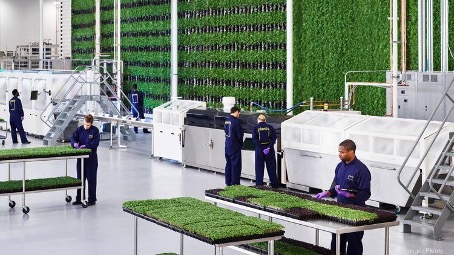
But like we all know, not everything that glitters is gold and there are also some down sides to vertical farming. First of all, it is extremely demanding in energy consumption. In fact, vertical farming was only made possible by the commercialisation of LED lights, which can produce up to 75% more light compared to traditional light bulbs. But still, it is extremely expensive. Energy consumption and all the technological appliances require big investments and make it difficult to produce foods at a competitive price for the market. Furthermore, for the moment vertical farming is only limited to few produce types such as leafy greens and microgreens. And we could also consider the social aspect of jobs that would be lost to technology. On the other hand, not all the vertical farms use robots for harvest, and we could argue that more stable jobs with better conditions could be created as harvesting in vertical farms is no longer seasonal but can be done the whole year around. Interestingly all the companies mentioned above fight for a better world not only on an environmental level, but also by engaging in social projects. They commit to give back to the communities by donating food to combat food insecurity, hiring local residents, and promoting education.
Vertical farming helps to assure future production of fresh produce despite scarcity of land, extreme weather events caused by climate change and pest infestations. It cuts the use of water and land, managing to produce higher yields and enables harvesting of fresh and ripe produce all year round. It cuts the transport necessity to a minimum and allows to deliver fresh foods within hours from the farm on a plate. If we embrace these technologies and develop them further, to cut the production costs and enable competitivity on the market, it could be one of many steps in the right direction. It would help to tackle climate change, increase food security and make healthy diets more available for larger communities.
Author: Magdaléna Jancikova
Image Source Title: Nigel Sussman; https://www.fao.org/state-of-food-security-nutrition
References:
1 https://news.un.org/en/story/2021/06/1093202#
 FoodArchitecture