The integration of Artificial Intelligence (AI) into the culinary world presents an intriguing paradox. On one hand, there’s immense potential for creativity and innovation, pushing the boundaries of what’s possible in gastronomy. On the other, there’s a growing concern about preserving the rich, diverse culinary traditions that represent the heart of cultures worldwide. In this blog post, we’ll explore this dynamic, arguing that while AI can significantly enhance culinary creativity, it’s crucial to ensure that this technological advancement does not overshadow the essential elements of cultural preservation in gastronomy.
AI in culinary creativity
AI’s role in the culinary arts is not just innovative but revolutionary, offering new possibilities in the way we approach food and cooking. These advanced algorithms can analyze vast databases of ingredients, cooking techniques, and flavor profiles to create recipes that might never occur in traditional culinary practice. This capability stretches the imagination, introducing unexpected pairings and techniques that could lead to the next evolution in gastronomy. AI systems, for instance, can suggest ingredient substitutions based on flavor compounds, creating dishes suitable for specific dietary requirements while maintaining taste. Furthermore, AI in molecular gastronomy is exploring new textures and forms, pushing the boundaries of what we consider as food. Yet, this exciting progress is not without its challenges. The reliance on algorithm-driven creativity might lead to a homogenization of tastes or overlook the subtle nuances that a human chef brings, rooted in cultural understanding and personal experience. It raises questions about the future role of chefs and the essence of cooking as an art form. AI also plays a role in managing food supply chains, optimizing inventory based on predictive analytics to reduce waste.

Ethical challenges in AI-culinary integration
Concerns about algorithmic bias, while significant, are particularly pronounced in scenarios where AI models and datasets are monolithic and lack diversity. A varied array of AI systems, each drawing from a wide spectrum of culinary traditions, can mitigate this issue. This diversity ensures a more comprehensive and inclusive representation of global cuisines, thereby diminishing the risk of marginalizing certain culinary practices. Furthermore, the ethical application of AI in gastronomy extends beyond the technology itself to its users. Chefs, gastronomists, and culinary enthusiasts are at the forefront of this integration. They play a critical role in interpreting AI-generated suggestions and ensuring that these align with sustainable practices and the rich tapestry of culinary diversity. Their decisions in selecting, modifying, or even disregarding AI recommendations are pivotal in maintaining ethical standards in the culinary world. AI tools, in essence, are heavily influenced by the datasets they are trained on and the objectives set by their human operators. As such, the ethical impact of AI in gastronomy is significantly shaped by human decision-making and intentions.
Conclusion: striking a balance
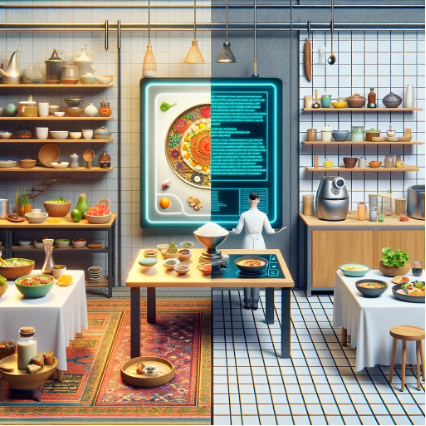
In the evolving journey of AI in gastronomy, balance is key. Embracing AI’s innovative potential needs to be harmonized with active engagement in culinary heritage. The future of gastronomy is not just in preserving traditions as static relics but in continually reinvigorating them through practice and innovation. AI can be a part of this process, offering new perspectives and possibilities, while the essence of keeping these traditions alive lies in their continual practice and adaptation in the kitchen. The interplay between AI-driven creativity and the dynamic preservation of culinary heritage can pave the way for a gastronomic future that is both technologically advanced and culturally rich.
Salvatore Ivana
Image source: The images have been created by the author with the help of DALL-E.
 FoodArchitecture