As the calendar flips to 2025, it’s hard not to feel a renewed sense of purpose and optimism for what lies ahead. For ReDI School of Digital Integration, this new year marks another step in their inspiring journey to create a more inclusive, tech-savvy world. With a clear mission to empower refugees and underrepresented communities through education, ReDI School has been quietly changing lives—and leaving a significant impact in its wake.
But what makes ReDI School truly stand out isn’t just their impressive numbers—8,000 participants per year, 60% of whom are women, or their €253 million social value created since 2016. It’s their ability to combine the power of technology, human potential, and community spirit in a way that feels deeply personal and meaningful.

Breaking Barriers Through Learning
Imagine arriving in a new country with few resources, facing language barriers, and trying to navigate a completely foreign culture. Now imagine having a support system that not only teaches you digital skills but also opens doors to meaningful work, connects you with a mentor, and helps you find your voice. That’s what ReDI School does.
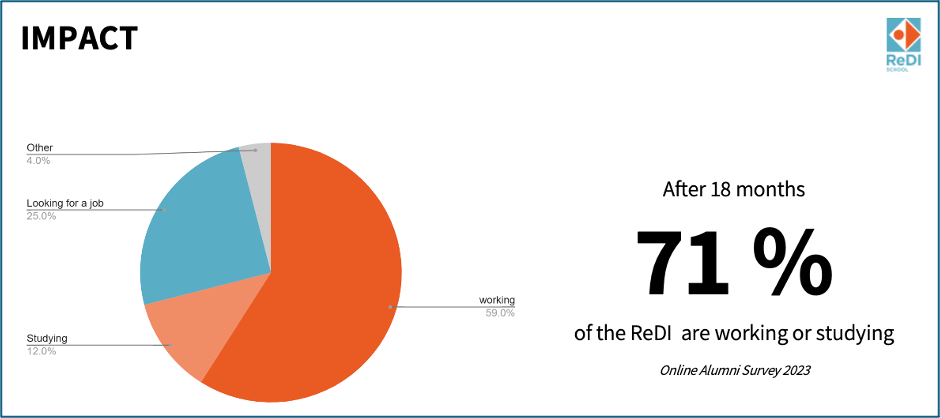
From coding bootcamps to digital literacy programs for kids and career workshops, ReDI offers tools for a brighter future. Their programs aren’t just about learning—they’re about building confidence and hope. It’s no wonder that within 18 months, 71% of their graduates are working or studying.
A Model for Inclusion
One of ReDI’s biggest strengths is their holistic approach. They don’t just teach coding; they provide mentorship, soft skills training, and career counseling. They partner with companies, not only to open job opportunities for their students but also to foster diversity in the workplace. This creates a win-win situation: companies get access to international tech talent, refugees get jobs, and society benefits from lower integration costs.
My Take: The Next Chapter for ReDI School
While ReDI School is a shining example of what’s possible when education meets inclusion, I believe there’s always room to evolve. One area to explore could be expanding their reach to more remote or rural areas, ensuring that digital inclusion isn’t limited to urban hubs. They could also deepen their alumni network, creating long-term mentorship opportunities that help graduates navigate their careers even after they’ve completed the program.
Moreover, as the digital world evolves, ReDI has a unique chance to pioneer education in cutting-edge fields like blockchain, AI ethics, and green tech—areas where the world desperately needs fresh perspectives. Scaling such programs while maintaining their personal touch will be a challenge, but it’s one I think ReDI is more than capable of meeting.
ReDI School is proof that education can do so much more than teach skills—it can change lives. And in doing so, it can change the world. If 2025 is a year for new goals, I can’t think of a better example to follow than ReDI’s.
What are your thoughts on their approach? Could this model work in other areas, or is there something missing? I’d love to hear your take.
For more information or to get involved, contact Anne Kjaer Bathel at anne@redi-school.org or visit redi-school.org. Together, we can create a world where digital integration is a win-win for everyone.
David Lin
Sources: Images were retrieved from the presentation of Anne Kjaer Bathel
 FoodArchitecture