In recent decades, genomic analysis has evolved from an academic pursuit to a transformative tool in numerous industries, including healthcare, agriculture, and environmental science. One of the most promising yet underappreciated areas of application is the food industry. By unlocking the secrets of DNA, genomic analysis is revolutionizing how food is grown, processed, and consumed, paving the way for safer, more sustainable, and more personalized food systems.
The Early Days: Mapping the Genome
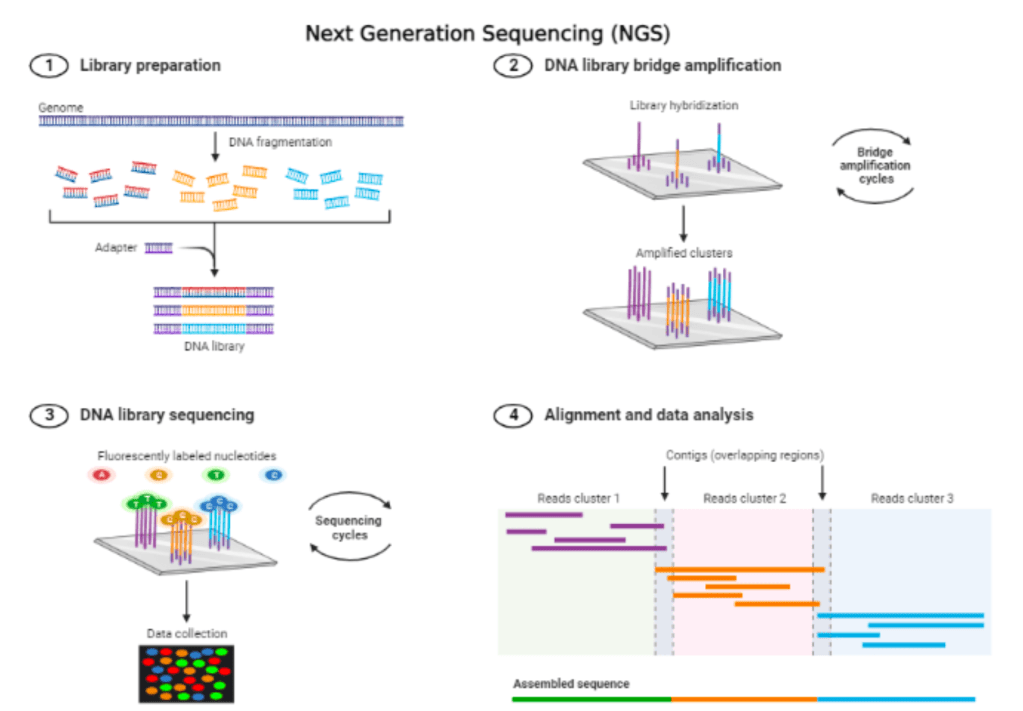
The journey began with the Human Genome Project (HGP) in the 1990s, a massive international effort to sequence the entire human genome. This major project stimulated the advancement of sequencing technologies, making them faster, cheaper and more accessible. Techniques such as Sanger sequencing gave way to next-generation sequencing (NGS), which allowed whole genomes to be analysed in a matter of hours instead of years, in figure 1 is possible to see the process of the NGS, which is way more efficient.
Although the initial focus was on human health, researchers soon realised the potential applications of genomic analysis in agriculture and food science. For example, the sequencing of crop and livestock genomes has provided information on traits such as yield, disease resistance and drought tolerance, laying the foundation for genetic improvement.
Genomic Analysis in Modern Agriculture
Agriculture was one of the first sectors to benefit from genomic insights. By understanding the genetic makeup of plants and animals, scientists have been able to:
1. Enhance Crop Yields: Genomic tools help identify genes associated with higher productivity, allowing breeders to create varieties that are more robust
2. Improve Disease Resistance: By pinpointing the genes responsible for susceptibility or resistance to diseases, researchers can develop crops and livestock less prone to illness.
3. Combat Climate Change: Genomics enables the development of plants that can thrive in extreme conditions, such as heat, salinity, or drought.
Applications in Food Safety
Genomic analysis is also transforming food safety. Rapid sequencing technologies allow for the quick identification of pathogens in food products, enabling faster responses to contamination events. This capability has significant implications for public health, as it reduces the time needed to trace and contain outbreaks.
Some key advancements include:
• Pathogen Tracking: Whole-genome sequencing can pinpoint the source of contamination, such as a specific farm or production facility.
• Spoilage Prevention: Genomic tools can identify spoilage organisms, helping manufacturers optimize storage conditions and shelf life.
• Allergen Detection: By analyzing the DNA of ingredients, food producers can ensure accurate labeling and minimize allergic reactions.
The Rise of Personalized Nutrition
One of the most interesting developments in genomic analysis is its potential to personalise nutrition. By analysing an individual’s genetic make-up, scientists can recommend food choices tailored to his or her specific needs. For example, certain genetic variants influence the way individuals metabolise nutrients such as fats, carbohydrates or vitamins. Understanding these relationships allows the creation of personalised diet plans and functional foods designed to optimise health.
Sustainability and Ethical Considerations
Genomic technologies also offer solutions to pressing global challenges, such as food waste and sustainability. For example, gene-editing techniques can produce crops with longer shelf lives, reducing spoilage. Similarly, advances in synthetic biology allow for the production of alternative proteins, such as lab-grown meat and plant-based substitutes, which require fewer resources than traditional animal farming.
However, the use of genomics in the food industry is not without ethical concerns. Questions around genetically modified organisms (GMOs), data privacy in personalized nutrition, and the equitable distribution of genomic technologies must be addressed to ensure responsible innovation.
The Future of Food
The integration of genomic analysis into the food industry is still in its early stages, but its potential is enormous. As sequencing technologies continue to advance and become more affordable, their applications will expand, leading to:
• Smarter Supply Chains: DNA barcoding can ensure traceability, helping consumers verify the authenticity and origin of their food.
• Improved Global Food Security: Genomics can aid in developing crops that thrive in diverse environmental conditions, helping feed a growing population.
• Healthier Populations: Personalized nutrition and functional foods can reduce diet-related diseases and improve overall well-being.
NGS open the possibility to a faster DNA analysis and way more efficient, the combination of NGS and AI is probably the next generation. I see this new possibility as a way to speed up the way of working and possibly reduce working hours, however it should first be tested, validated and regulated by each government.
In concusion, genomic analysis is more than a scientific discovery: it is a catalyst for innovation in the food industry. By harnessing the power of DNA, we can build a food system that is safer, more sustainable and more in line with the needs of individuals and the planet.
Alessandro Lobba
Sources:
Chatgpt and the slides from Lars Fieseler
Image Source:
 FoodArchitecture