
Technology is set to transform the way we dine at restaurants, making it more seamless, personalized, and efficient. Imagine walking into a restaurant where you are instantly recognized by a digital system that greets you by name and knows your preferences. Digital menus displayed on tablets or screens will adapt to your tastes, suggesting dishes based on your past orders, dietary restrictions, or even the weather. This kind of personalization will make dining out more enjoyable and tailored to each individual’s needs.

Just imaging in the next 10 years, you walk into a restaurant, and instead of being handed a worn-out menu, your table lights up with a sleek, interactive digital screen showcasing mouth-watering holograms of each dish. These smart tables not only let you browse the menu in 3D but also entertain you with games and restaurant trivia while you wait for your meal. It’s like dining inside a sci-fi movie, but with better food. Holographic menus can provide detailed ingredient breakdowns and even recommend wine pairings, making you feel like a gourmet expert. Beyond the cool factor, this technology enhances efficiency by reducing order mistakes and streamlining service. No more misheard “no onions” requests just a seamless, interactive, and fun dining experience.

In the future, restaurants could take personalization to a whole new level with AI-powered recommendations tailored to your health goals and dietary needs. Imagine syncing your smartwatch with the menu, and voila it suggests a low-carb, protein-packed dish because it knows you’ve been hitting the gym hard (or maybe a salad after a Netflix binge). Combined with holographic displays, this technology can visually showcase portion sizes and nutritional benefits, making it easier than ever to make informed choices. It’s like having a personal nutritionist and a food stylist rolled into one. Plus, with AI continuously learning your preferences, your dining experience will only get better over time. Soon, restaurants might just know your cravings before you do.
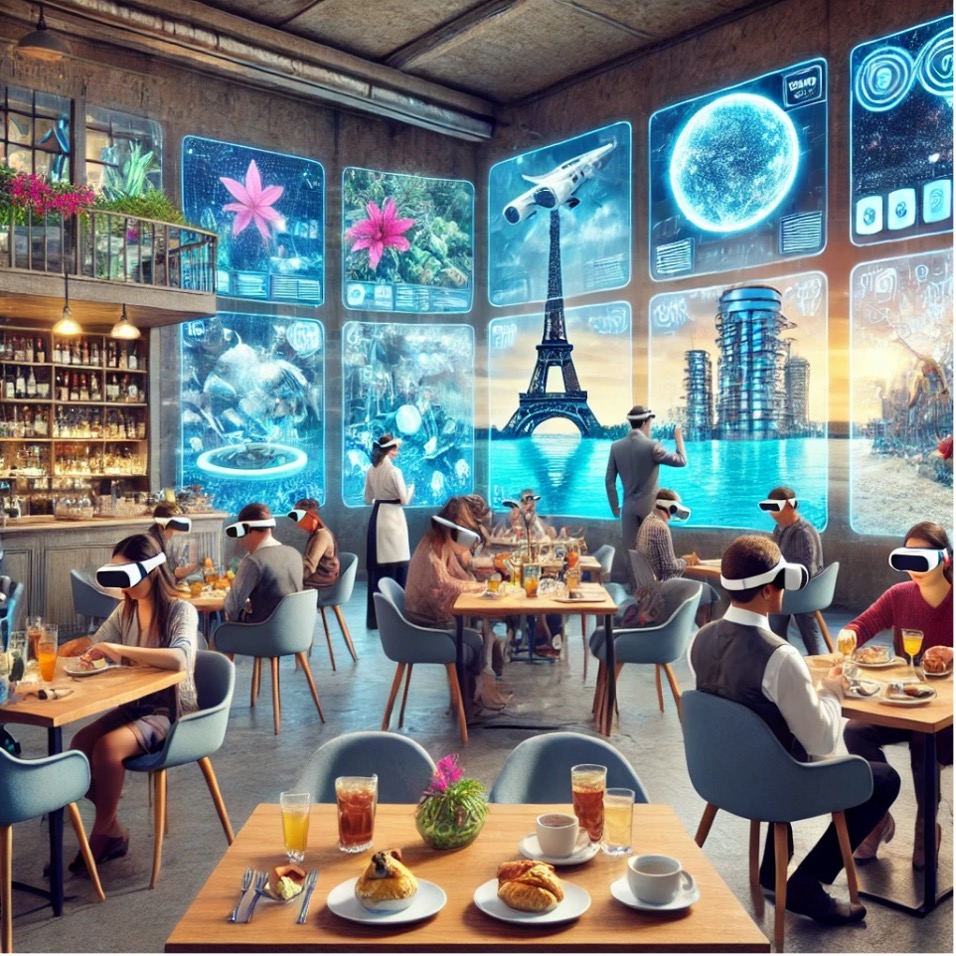
The ambiance of a restaurant is just as important as the food, and future technology could allow customers to customize it according to their mood. With augmented reality, you could transform your dining environment into anything from a cozy Parisian café to an exotic tropical beach, all through your smartphone or AR glasses. Feeling down? No problem, the system might suggest a cheerful bistro setting with lively music and colorful decor to lift your spirits. To top it off, virtual celebrity chefs could pop up and explain the story behind your dish, adding an entertaining and educational element to your meal. The combination of AR and emotional AI can detect your mood and provide recommendations that suit your state of mind, ensuring that every dining experience is not just a meal but a memory to cherish.
Potential downsides of this bright future?
While the advancements in restaurant technology promise numerous benefits, there are a few potential risks that could leave diners with more than just a bitter aftertaste. From privacy concerns to the loss of that good old human touch, these challenges might reshape how we enjoy our meals, for better or worse.
One significant downside is digital fatigue for customers, where too much screen time can turn a delightful meal into a high-tech meeting time and sometimes, we just want to enjoy our food without having to tap, swipe, or navigate of digital menus. With the constant engagement of interactive tables and AI-driven ordering systems, the soul of dining savoring delicious food and connecting with others might take a backseat. The overreliance on technology could make us forget the real joy of a simple conversation with our friends, family or even the fascinating history and the meaningful behind a dish. It is true that with the AI, we can transform your dining environment into anything from a cozy café to an exotic tropical beach, but it cannot replicate the genuine warmth of human interaction, the spontaneous laughter shared with friends, or the nostalgic aroma that brings back cherished memories of home cooked meals. That means in the future, restaurants need to find the sweet spot between cool tech and the timeless charm of traditional dining.
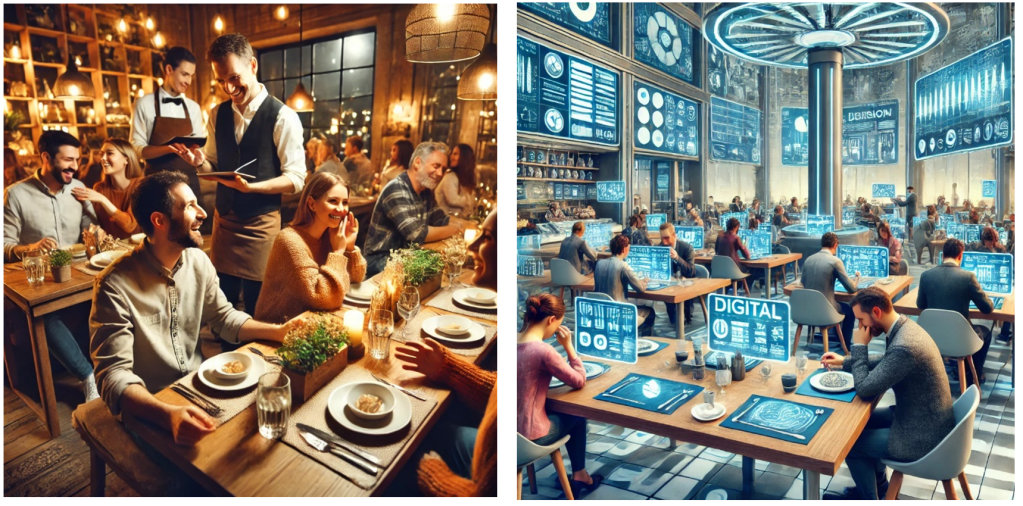
Another potential issue is privacy and data security concerns, one of the top customer’s concerns for every digital app. Since the restaurant could be access to your dietary habits feels a little like handing them the keys to your fridge. While personalized recommendations sound great, customers might feel insecure about how much information AI systems know about them. Cyberattacks and data breaches could expose personal details, leading to identity theft or financial fraud. Moreover, the constant tracking of food preferences might feel intrusive, raising concerns about how this data could be used beyond dining experiences.
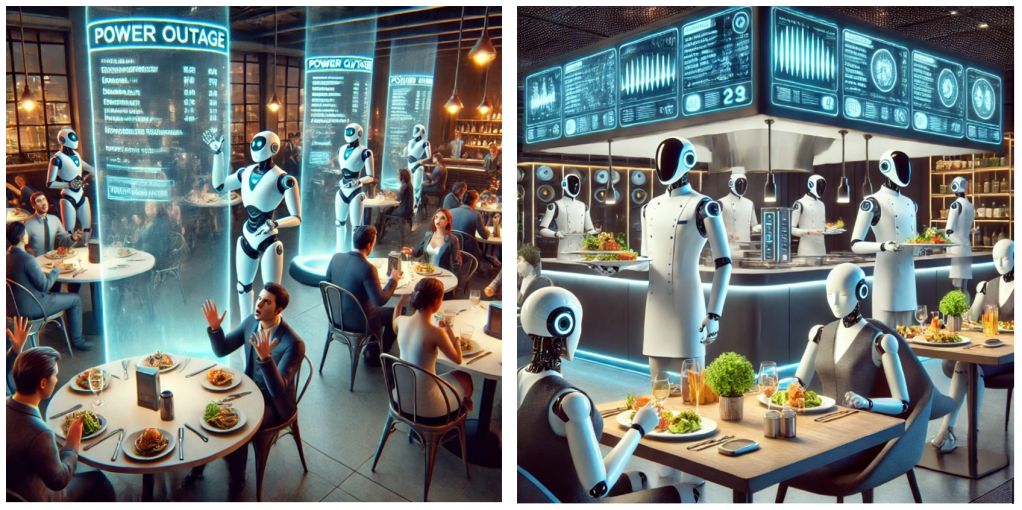
Increased dependence on technology is another headache waiting to happen. If the system goes down, so does the entire dining experience—leaving customers staring at blank screens instead of delicious meals. Picture a power outage during a busy dinner rush, with confused staff and hangry customers. Suddenly, a simple paper menu doesn’t seem so old-fashioned, does it? A solid backup plan is crucial to avoid potential tech-related disasters.
Implementing these innovations also comes with significant costs, which can feel like biting off more than a small restaurant can chew. High-tech gadgets such as holographic menus and smart tables may sound appealing, but they come with hefty price tags for installation and maintenance. As a result, diners may find themselves paying premium prices for what used to be an affordable night out, turning a casual dinner into a luxury experience.
Finally, there’s the concern of job displacement in the industry. As much as robots and AI are efficient, they can’t replace the personal touch that a friendly server brings to the table. The hospitality industry thrives on human connection and replacing it with automation could result in a less warm and welcoming environment. No amount of tech can replicate the charm of a server who remembers your “usual” order or makes you laugh with a well-timed joke.
In conclusion, while technology is undoubtedly revolutionizing the dining experience, it’s important to ensure it enhances rather than overshadows the human aspects that make dining special. A thoughtful balance between innovation and tradition will ensure that restaurants remain not just places to eat, but places to connect, relax, and create memories.
Khanh Ho Tu
Image sources: Images are created by Chat GPT-40
 FoodArchitecture